
Last updated November 21, 2026
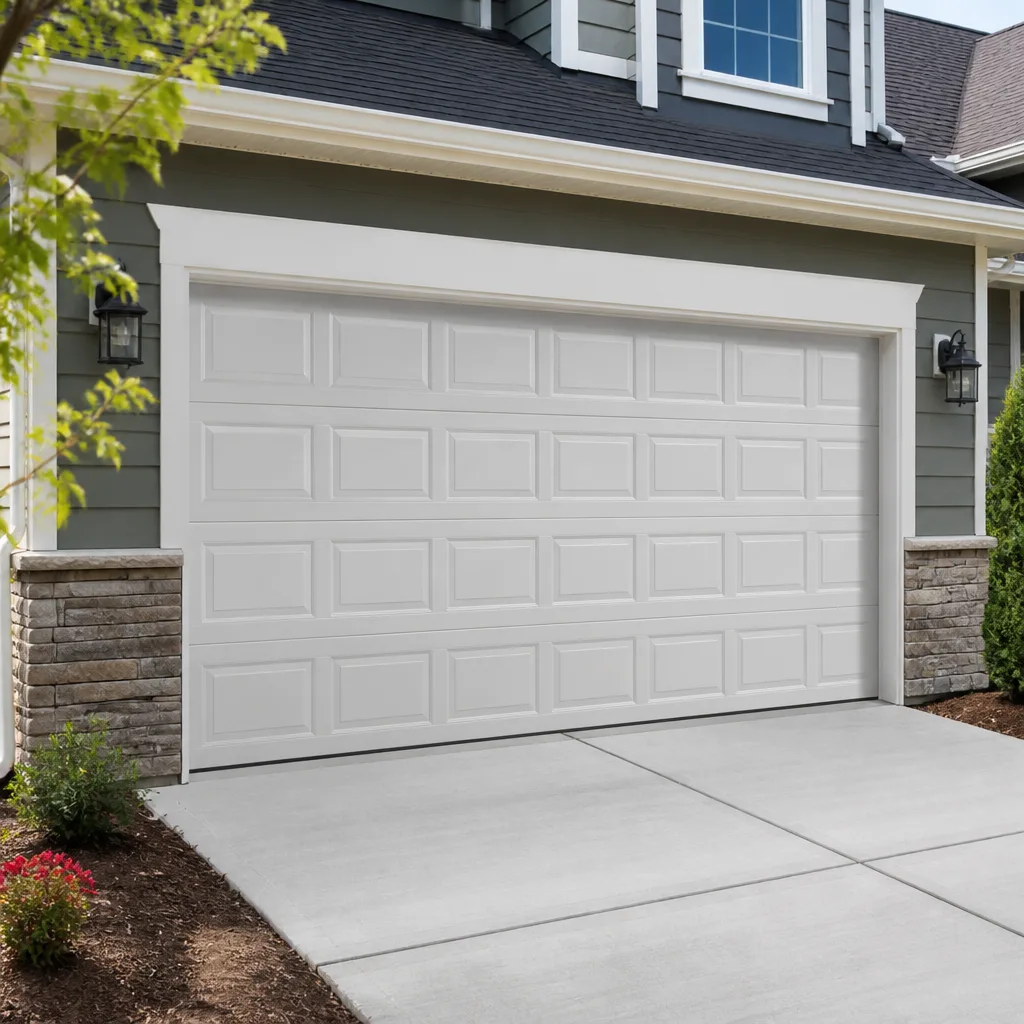 Raised-panel steel
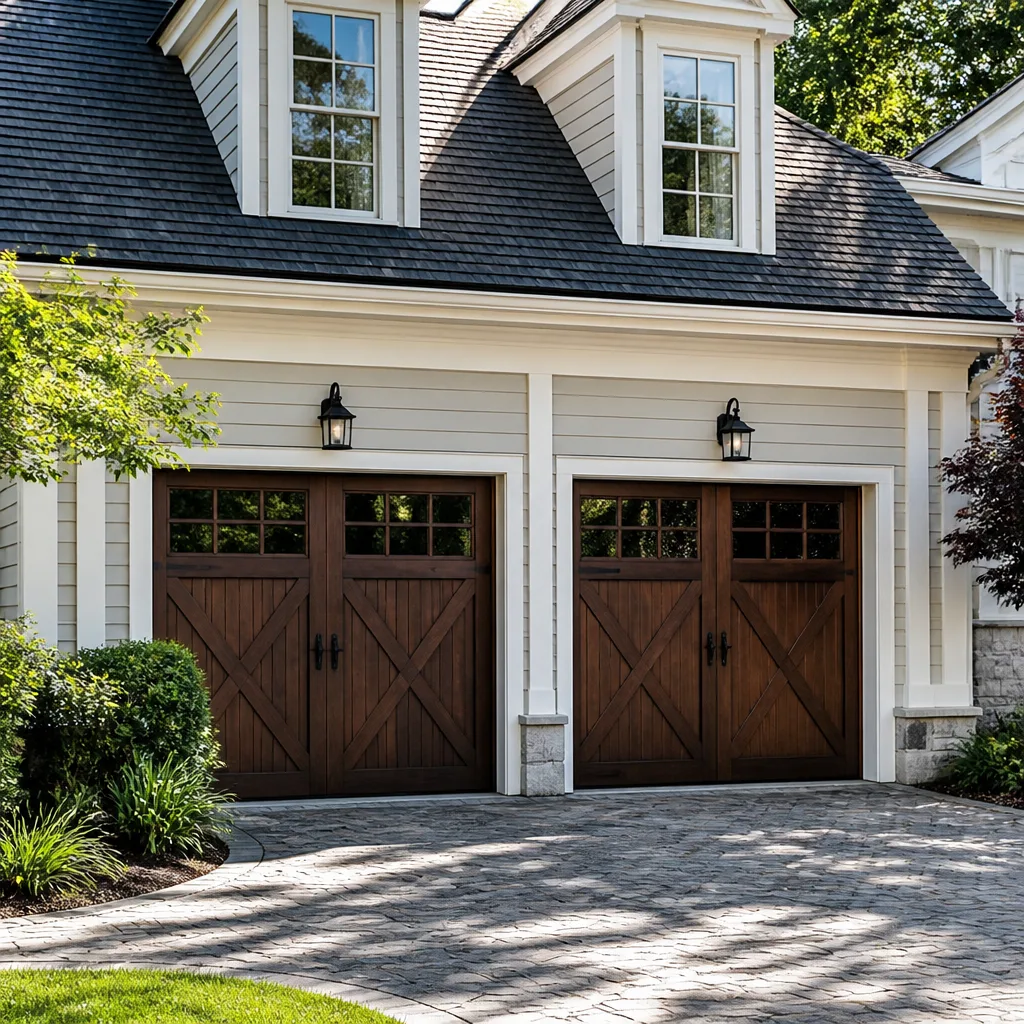 Carriage house
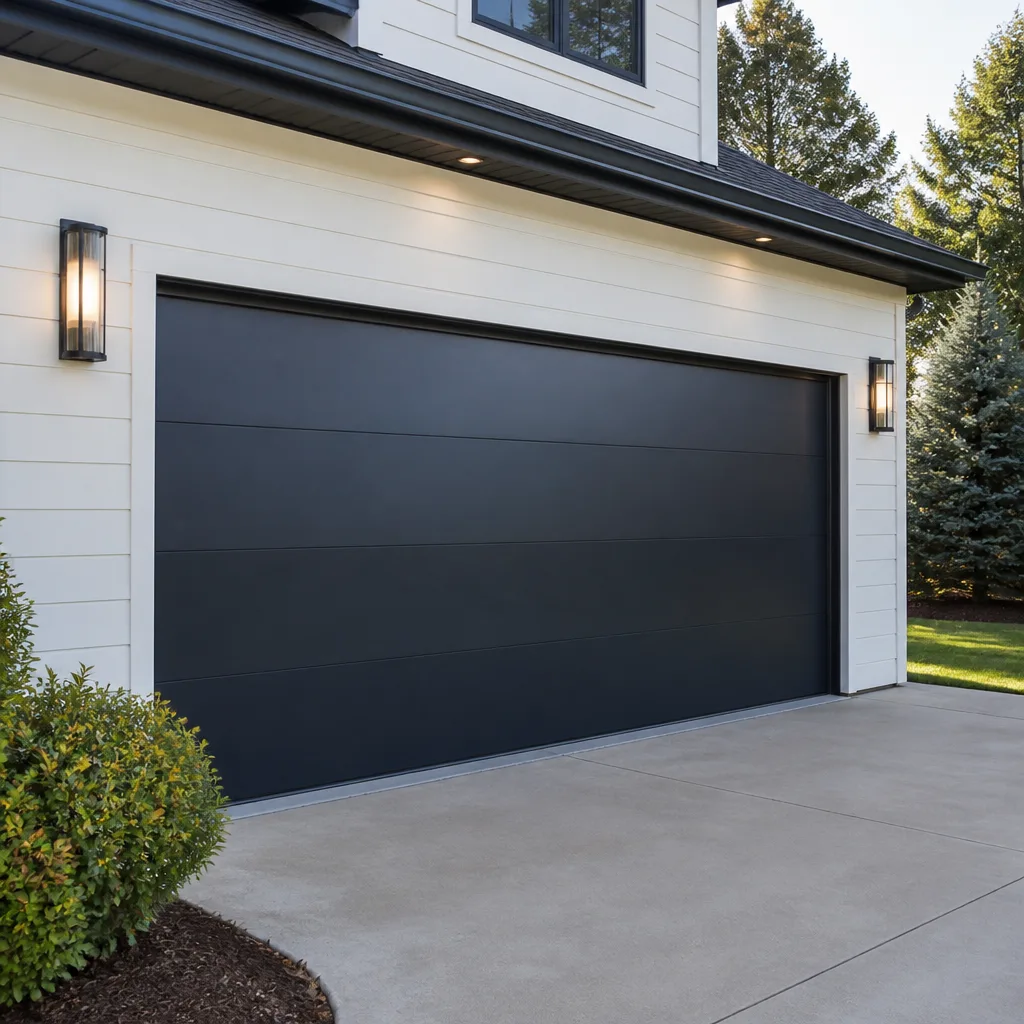 Modern flush
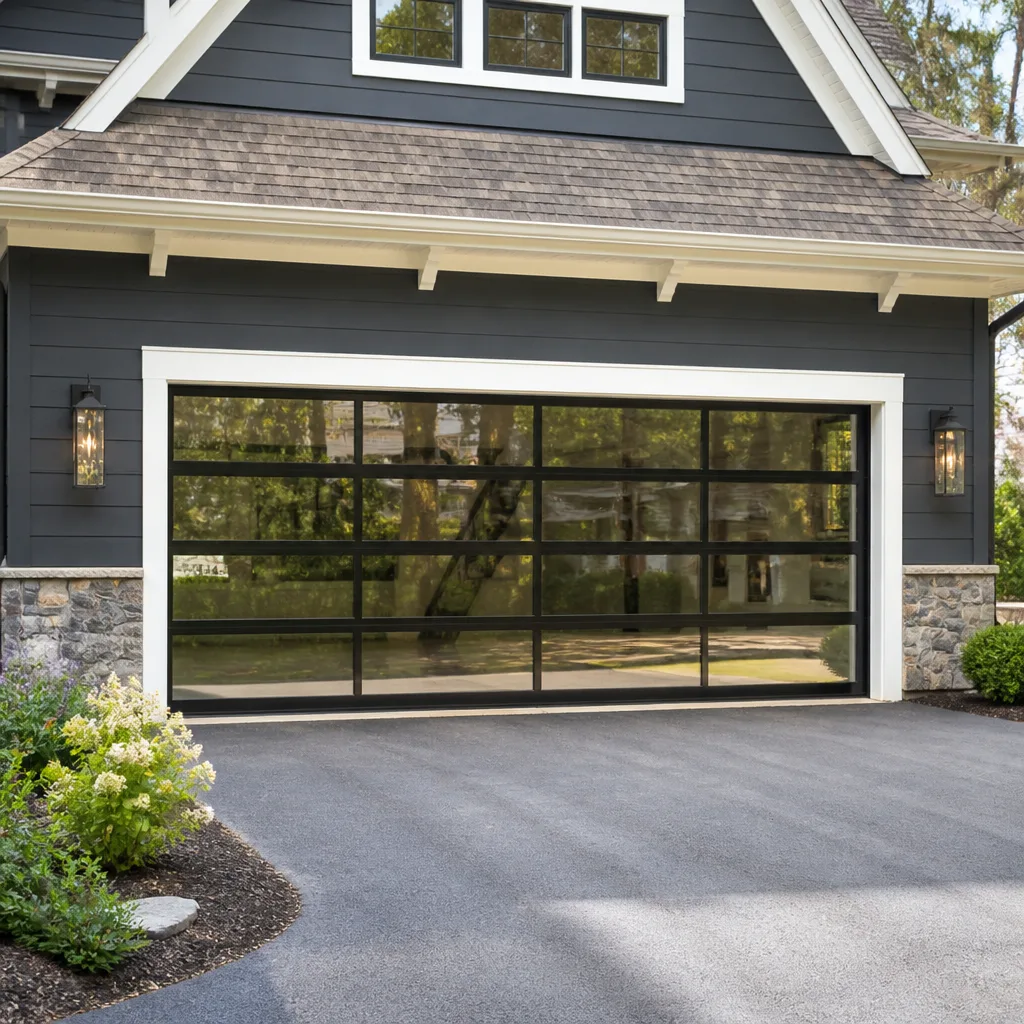 Full-view glass
 LiftMaster openers
 Chamberlain openers
Full 25-point door and opener safety check with every visit - springs, cables, rollers, tracks, and your LiftMaster or Chamberlain opener included
You get a price before we start. It does not change when the pro arrives.
Get your free estimateGarage Door Warning Signs: A Wesley Chapel Homeowner’s Reference Guide
Most garage doors don’t fail without warning. They fail after weeks or months of signals that got dismissed as “just getting old.” A door that hesitates for two seconds before closing isn’t aging gracefully, it’s telling you something specific about sensor alignment or a logic board that, left alone, turns into a safety liability and an opener replacement instead of a straightforward repair. The gap between “annoying noise” and “call someone now” is exactly where expensive failures live, and most homeowners don’t know which signals belong in which category. This guide closes that gap for Wesley Chapel homeowners. We break down the sounds, behaviors, and visual clues worth watching, name the likely cause behind each one, and rate how urgent it actually is.
Quick Answer
The warning signs that matter most on a garage door are grinding or popping sounds from the springs and cables, jerky or uneven movement, a door that reverses or stalls occasionally, visible cable slack, and any gap at the bottom or sides when the door is closed. Slow or hesitant operation is usually a sensor or opener logic issue, while sudden loud pops point to spring failure and should mean the door stays shut until a technician looks at it. Signs that are cosmetic only, like scuffs and faded paint, can wait. Signs that involve movement, sound, or reversal cannot.
Styles & brands we work with
- Raised-panel steel
- Carriage house
- Modern flush
- Full-view glass
- LiftMaster openers
- Chamberlain openers
Table of Contents
- What the sounds tell you: grinding, popping, scraping
- Behavior warning signs: slow, jerky, uneven, reversing
- Visual warning signs: gaps, rust, cable slack
- Opener-side problems vs. door-side problems
- Why a door that “works fine most of the time” is flagging failure
- Wesley Chapel triggers: humidity, pests, sand, and heat
- Five conditions where you stop using the door immediately
- What routine checks actually prevent
What the Sounds Tell You: Grinding, Popping, Scraping
Sound is the earliest warning system on a garage door, and the specific noise points to a specific part. Grinding usually means metal-on-metal contact somewhere in the track or roller assembly, and it rarely fixes itself. Popping is the one you take seriously immediately, because a loud pop followed by a door that won’t lift is the classic signature of a broken torsion spring. Scraping tends to come from a door that’s out of alignment and dragging against a track or frame.
Here’s how we sort them by severity:
- Grinding – usually worn rollers, a dry or damaged bearing plate, or debris in the track. Urgency: moderate. Left alone, it accelerates wear on the track itself.
- Popping or a loud bang – most often a torsion or extension spring breaking, or a cable slipping off a drum. Urgency: high. Stop using the door.
- Scraping – a door out of square, a bent track, or a panel rubbing the frame. Urgency: moderate to high depending on how hard it scrapes.
- Squeaking – usually rollers or hinges needing lubrication. Urgency: low. The one sound that’s genuinely a maintenance item rather than a failure signal.
- Rattling at the top of travel – often a loose opener rail or a worn trolley. Urgency: low to moderate.
Springs and cables are the dangerous half of this list. A torsion spring under tension stores enough energy to cause serious injury when it releases, and that includes the moment you try to inspect or adjust it. We handle garage door spring repair as a named specialty precisely because this is the job where a wrong move has real consequences. Don’t reach up with a wrench to “see what’s loose” on a spring assembly. Call instead.
Behavior Warning Signs: Slow, Jerky, Uneven, Reversing
A door that moves differently than it used to is telling you something. The trick is separating opener-side behavior from door-side behavior, and that distinction changes what the fix looks like. Slow or hesitant movement, a door that pauses before closing, and occasional reversals usually point to the opener, its sensors, or its logic board. Jerky travel, a door that binds partway up, or one side that lags behind the other is almost always a hardware problem: a worn roller, a bent track, a cable that’s jumped a drum.
A quick way to think about it: if the door moves smoothly by hand (with the opener disconnected and the door in the fully closed position so there’s no stored tension to fight), the door hardware is probably fine and the opener is the suspect. If the door binds or feels heavy when you move it manually, the door is the problem, and the opener has been compensating for it. That compensation is what burns out openers early.
Reversing is its own category. A door that reverses before touching the floor is doing what its safety sensors are designed to do, and that’s a good thing. A door that reverses only sometimes, or that reverses partway up, is behaving unpredictably, and unpredictable is the word that should end the debate. Occasional reversals don’t stay occasional. In our experience, a door that reverses intermittently is one sensor alignment away from a full stop, or one logic failure away from closing on something it shouldn’t.
If the diagnosis lands on the opener side, that’s a job we handle directly through garage door opener repair. Chain-drive, belt-drive, screw-drive, and jackshaft units all fail differently, and knowing the difference matters. We work on the brand already in your garage, whether that’s Genie, LiftMaster, Chamberlain, or Craftsman, and that familiarity shortens the diagnostic step considerably.
Visual Warning Signs: Gaps, Rust, Cable Slack
You can catch a lot of garage door problems with your eyes before they become sounds. Walk around the door once a month and look at four things: the bottom seal, the panel seams, the track, and the cables.
- Check the bottom seal. A visible gap under a closed door lets in water, pests, and heat. In Wesley Chapel, that gap also lets humidity into the garage year-round, which is where rust starts.
- Look at the panel seams. Hairline cracks along a panel edge usually mean the panel has taken an impact or the door is flexing under load. Small cracks grow.
- Run a hand along the track. You’re feeling for dents, bends, and debris. A track that’s been nudged out of alignment will pull the door to one side.
- Inspect the cables. Cables should be taut and evenly wound on the drums. Slack, fraying strands, or a cable sitting off its drum is a stop-using signal.
Rust is a slower signal but worth watching here. Wesley Chapel humidity plus a garage that isn’t climate-controlled means hinges, rollers, and the bottom of the door take on moisture. Surface rust on a hinge is cosmetic and easy to address. Rust that has pitted a cable or eaten into a spring is a structural concern. Cables and springs carry load, and a compromised cable is the kind of thing that fails at the worst possible moment, usually while someone is walking under it.
One more visual to watch: a door that sits visibly tilted when closed. If one side touches the floor and the other doesn’t, the door is out of balance, and out of balance means the springs or cables aren’t doing their share of the work. That’s a repair, not a quirk.
Opener-Side Problems vs. Door-Side Problems
Most homeowners blame the opener for anything that goes wrong, and that’s understandable: it’s the part with the button and the lights. But the opener only lifts what the door hardware allows it to lift. When the door itself is heavier than it should be, the opener works harder, runs hotter, and wears out faster. That’s why so many opener replacements are actually chasing a door problem that never got fixed.
Here’s the split we use in the field:
- Suspect the opener when: the door runs smoothly by hand, the remotes or keypad act up, the wall button works but remotes don’t, the opener light blinks in a pattern, or the unit runs briefly and stops.
- Suspect the door when: the door is heavy or binds by hand, one side lags, the door grinds or pops, the door comes off the track, or the door sits tilted when closed.
- Suspect both when: the door reverses intermittently, the opener strains audibly, or the door moves unevenly and the opener cuts out.
The good news is that a proper diagnostic doesn’t require a guess. An experienced technician tests the door’s balance first, then the opener’s force settings and sensor alignment. Brand familiarity helps here too. Clopay and Amarr doors have their own balance characteristics, and Wayne Dalton doors with the older TorqueMaster spring systems behave differently than a standard torsion setup. Wayne Dalton is one of the eight brands our technicians work with regularly, and knowing the door’s lineage before opening a toolbox saves time and avoids wrong-part runs.
The most useful habit you can build is this: when something feels off, test the door by hand before you call. It’s a 60-second check that tells you which half of the system is likely at fault, and it puts you in a better position to describe the problem accurately.
Why “Works Fine Most of the Time” Is Flagging Failure
An intermittent problem is not a smaller problem. It’s a problem that hasn’t happened to be happening at the moment you tested it, which is a different and more dangerous thing. A door that reverses one time in twenty is not “temperamental.” It’s a sensor that’s drifting out of alignment, or a logic board that’s starting to glitch, or a cable that’s beginning to slip.
Intermittent behavior has three common causes:
- Sensor misalignment. The photo-eye sensors near the floor have to see each other cleanly. Sunlight angle, a bumped bracket, or a spiderweb can interrupt the beam. Misalignment gets worse as the door’s vibration nudges the brackets over time.
- Logic board or force settings drifting. Openers have force limits that stop the door if it meets resistance. When the door’s actual resistance increases (because of a worn roller or a dry hinge), the opener’s limit gets hit intermittently, and the door reverses.
- A failing capacitor or aging motor. Older openers can start weak and get weaker. A unit that stalls once a week will stall daily within a month or two.
Here’s the part that matters: intermittent safety failures are the ones homeowners live with the longest, because there’s no clear moment to act. A door that quit and stayed quit gets a call the same day. A door that quit once and then worked fine gets ignored for a season. If your door has reversed on its own or stalled mid-travel even once, that’s worth a same-day call rather than a wait-and-see. We answer 24/7, and we can usually get a technician out the same day to look at it.
Wesley Chapel Triggers: Humidity, Pests, Sand, and Heat
Garage doors in Wesley Chapel take a different set of hits than doors in drier or cooler climates. That shows up in symptoms that look mechanical but aren’t quite.
Humidity is the big one. Wesley Chapel’s summer humidity works on every metal surface in the garage. Hinges seize, rollers drag, and cables pick up surface corrosion that turns into binding. A door that grinds in July but ran quietly in January is usually showing you humidity-driven lubrication and rust issues, not a broken part.
Wasps and other pests nest in the track openings, in the corners of panels, and behind the opener housing. A nest in a track will cause the door to bind or scrape, and it looks exactly like a bent track from the driver’s seat. If you find a nest, don’t spray it and then run the door. Clear it carefully, then test.
Sand and grit from driveways, lawns, and nearby construction work its way into tracks and roller assemblies. Grit in a track turns into grinding, grinding turns into worn rollers, and worn rollers turn into a door that runs uneven. A quick track wipe-down a few times a year prevents most of this.
Heat affects the opener more than the door. Opener motors in an unventilated Wesley Chapel garage run hotter in summer, which shortens the life of capacitors and logic boards. If your opener struggles specifically in the hottest months, that pattern is a signal, not a coincidence.
None of these local triggers require a different repair approach, but they change what we check first. When the door is binding, the track and roller condition gets a look before the opener does. That’s not the sequence a generalist handyman would run, and it’s why a garage door specialist tends to diagnose faster. Wesley Chapel homes also sit in a mix of newer construction and established neighborhoods, and door age doesn’t always match house age. A door replaced five years ago in a twenty-year-old house is a different starting point than a factory-original door, and we ask before we diagnose.
Five Conditions Where You Stop Using the Door Immediately
Some warning signs mean “call this week.” A smaller set means “call now and don’t run the door.” Here’s the list that matters most:
- A broken spring. If you heard a loud pop and the door won’t lift by hand, a spring has failed. Never operate the door, and never try to lift it manually to get the car out. A door with a broken spring is a dead weight a human can’t safely control.
- A snapped, slack, or off-drum cable. Cables carry load. A loose or frayed cable means the door can drop or come off track.
- A door that has come off the track. Don’t run the opener to “see if it will reseat.” It won’t, and the panel can twist, bind, or fall.
- A door closing on a person, pet, or object. If the safety reverse has failed, the door’s auto-reverse is the only thing preventing injury. Stop using it and get the sensors and opener checked.
- Visible structural damage to a panel. A cracked or separated panel can flex and fail at the hinge points. It’s also a security gap.
Each of these is a genuine safety issue, not an inconvenience to live with. Spring and cable work should always be done by a trained technician. That’s not a liability disclaimer, it’s practical advice: the stored energy in a torsion spring is significant, and we’ve handled enough of these to know that the failures don’t discriminate by experience level.
What Routine Checks Actually Prevent
You don’t need to know how to fix a garage door to extend its life. You need to know what to look at and when to leave it alone. A monthly two-minute check covers most of it.
- Balance test. Disconnect the opener and lift the door halfway. It should stay put. If it drifts down or shoots up, the springs need adjustment.
- Safety reverse test. Place a piece of wood flat on the floor in the door’s path, run the door closed, and confirm it reverses on contact. If it doesn’t, stop using the door.
- Sensor check. Wipe both photo-eye lenses clean monthly and confirm the indicator lights are steady.
- Track wipe-down. A dry rag along the track removes sand and grit before it becomes grinding.
- Hinge and roller lubrication. A garage door lubricant (not WD-40) on hinges and rollers a couple of times a year reduces the humidity wear.
- Listen on the way out. Two seconds of attention to the sound of the door each time you use it is the cheapest diagnostic you have.
When a routine check turns up something you don’t want to handle, that’s what we’re here for. Full repair work for doors and openers, along with garage door repair for the specific part that’s failing, is what fills our schedule day to day. We can also work with your insurer if a door was damaged in a storm or an impact.
Common Mistakes to Avoid
- Blaming the opener for everything. Most opener replacements we see are chasing a door problem. Test the door by hand first; if it binds, the opener isn’t the fix.
- Spraying WD-40 on the track. It attracts dust and grit and makes the grinding worse over time. Use a proper garage door lubricant and only on hinges and rollers.
- Ignoring a one-time reversal. An intermittent reverse is a safety system failure in progress. Treat it like a stop sign, not a blip.
- Letting a wasp nest sit in a track. Pest nests in Wesley Chapel garages cause binding that looks mechanical. Clear them before testing the door.
- Trying to adjust or replace a torsion spring. This is the single most dangerous job in garage door work. Call a technician.
- Skipping the monthly balance test. Two minutes a month catches spring fatigue before it becomes a broken spring.
- Replacing a whole door when only the opener is failing. Panels that are structurally sound don’t need replacement just because the opener is on its last leg.
See the difference
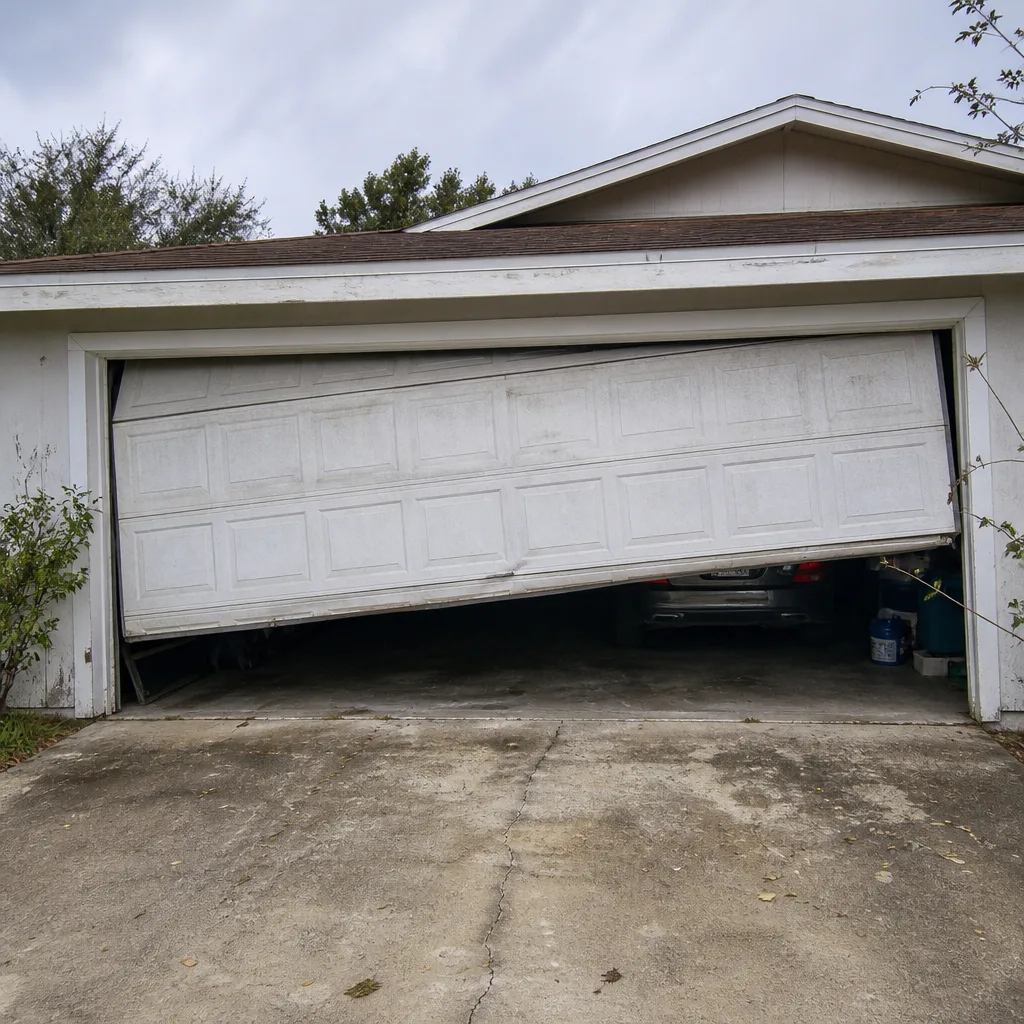 Before
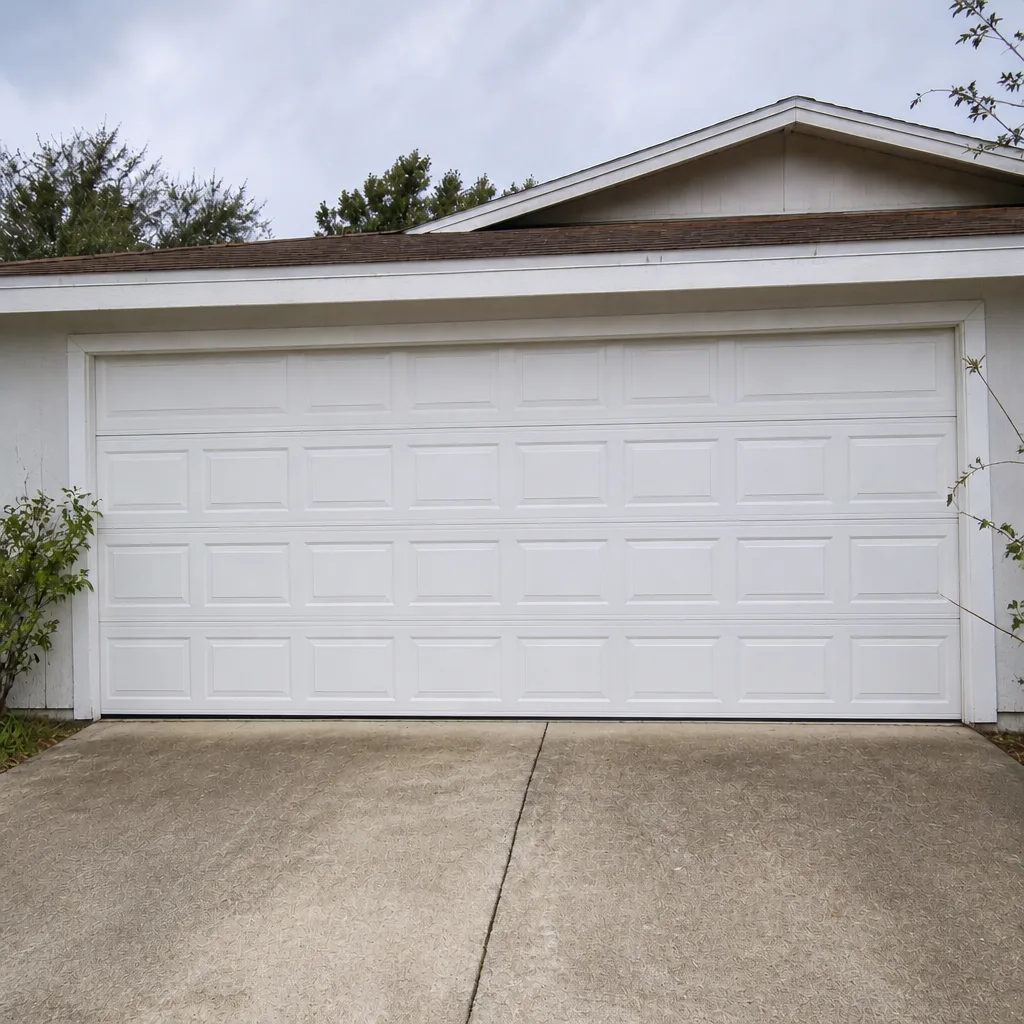 After
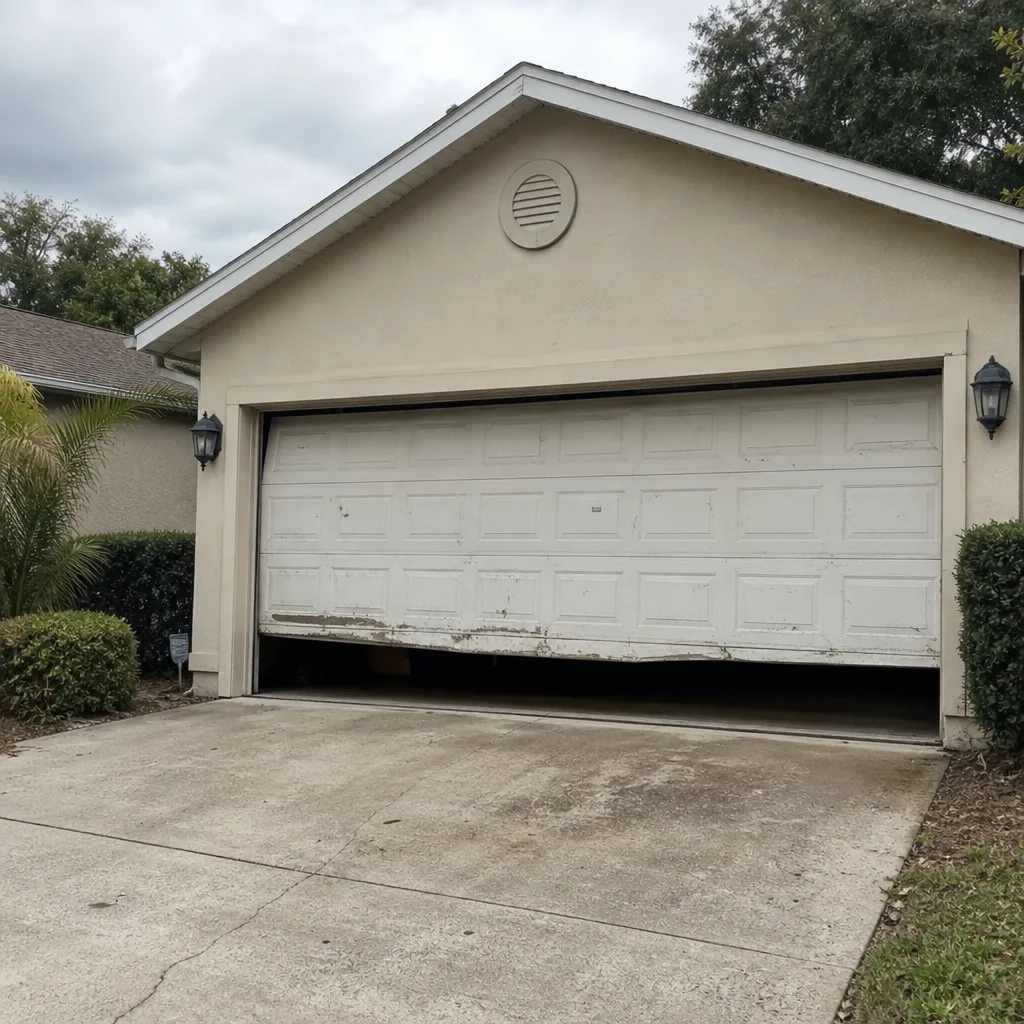 Before
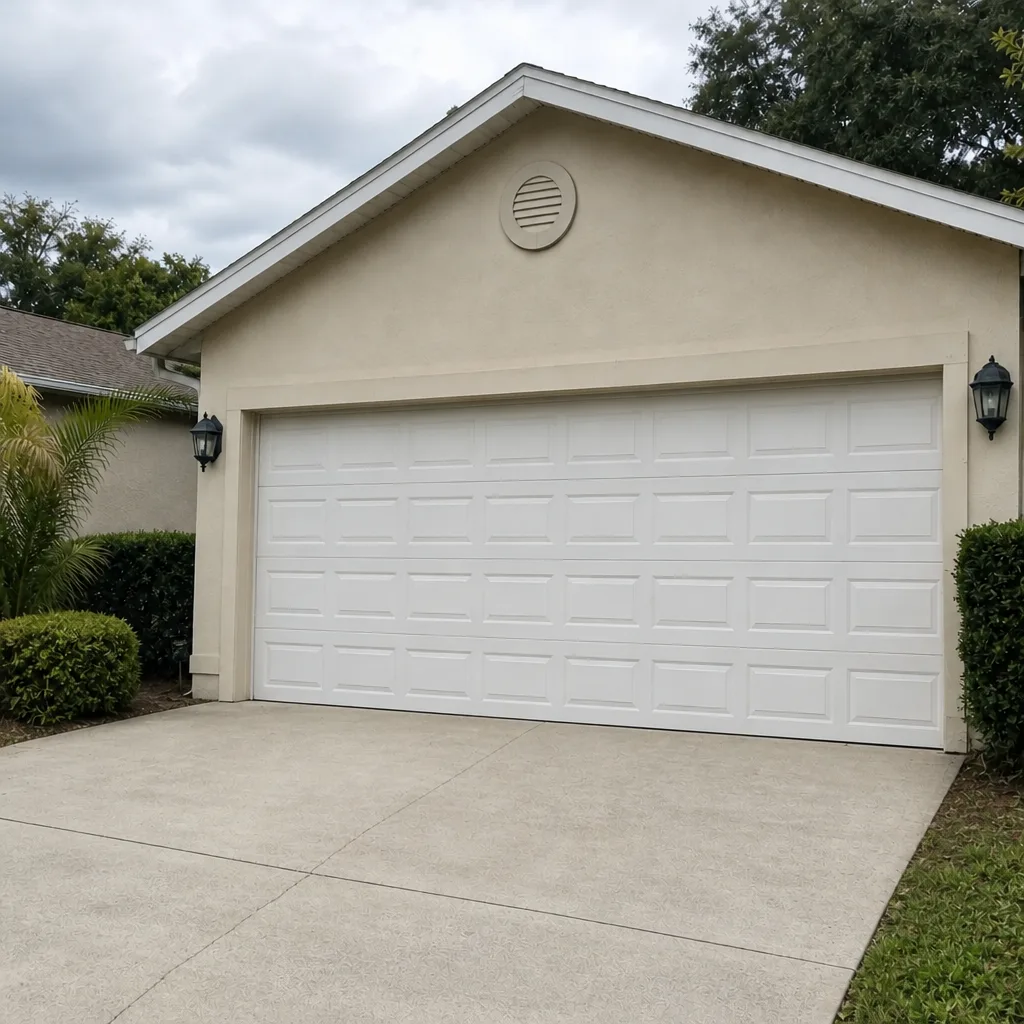 After
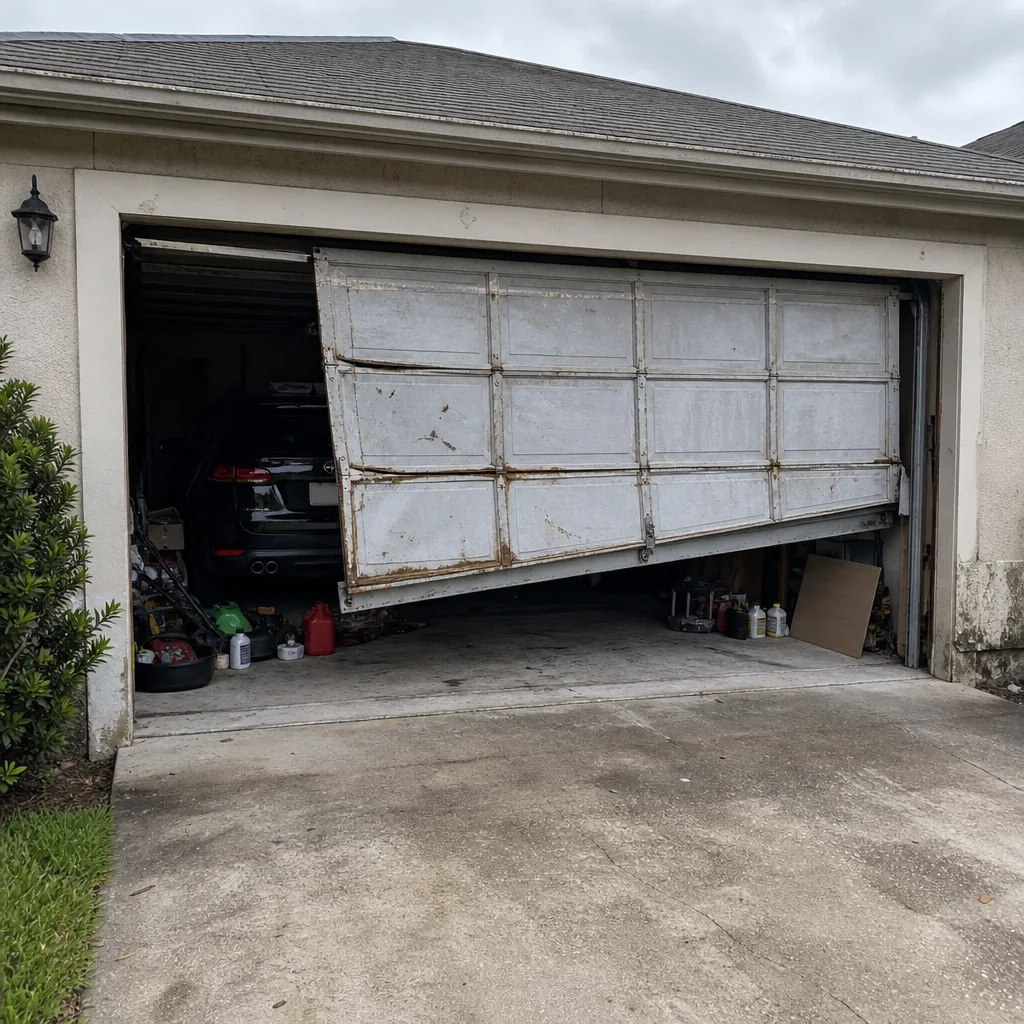 Before
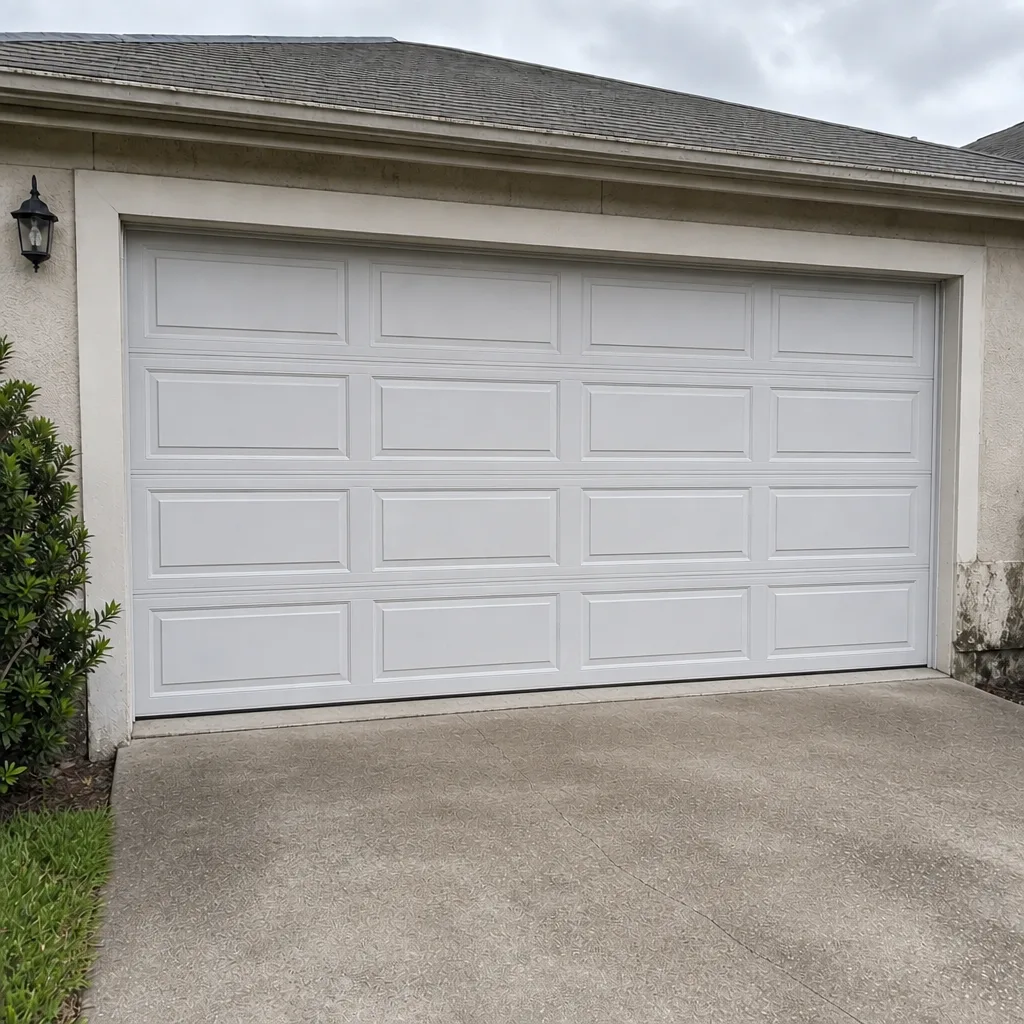 After
When to Call a Professional
Call us when any of the five stop-using conditions above applies, when a sound has changed in a way that keeps getting worse, when the door reverses occasionally, or when you’re not sure which half of the system is failing. Those are the calls that save real money later. A small repair done early stays small, and a door that’s diagnosed before it fails usually means an easier fix than the same door diagnosed after it’s broken. Wesley Chapel Garage Door Repair Pros offers free estimates in Wesley Chapel, and we can get a technician to most homes the same day. Call (877) 657-1302. We answer 24/7, with fast dispatch from 7am to 7pm, Sunday through Friday.
Our technicians have up to 12 years of experience working on doors from Clopay, Amarr, Wayne Dalton, and Raynor, and opener systems from LiftMaster, Chamberlain, Genie, and Craftsman. We work on the brand already in your garage, so diagnosis stays fast and the right part gets ordered the first time. Emergency service is a named offering, not an afterthought: if your door won’t close or won’t open, that’s a call we take seriously.
Frequently Asked Questions
Repair is usually the right call when the door moves smoothly by hand, the panels are structurally sound, and the problem is localized to the opener, a spring, a roller, or a track. Replacement makes sense when panels are cracked or rusted through, when the door is out of balance and can’t be corrected with spring adjustment, or when repeated repairs on a door with structural damage keep adding up. A free estimate tells you which side you’re on.
Grinding usually means metal-on-metal contact from worn rollers, a dry bearing plate, or grit in the track. In Wesley Chapel, sand and grit from driveways and lawns is a common contributor. It’s a moderate-urgency sign; it rarely fixes itself, and it accelerates wear on the track if ignored. Call (877) 657-1302 for an exact quote – estimates are free.
Intermittent reversing usually points to sensor misalignment, drifting force settings, or an aging capacitor in the opener. It’s a safety issue, not a fluke. A door that reverses on its own, even once, should get looked at. Call (877) 657-1302 for an exact quote – estimates are free.
In most cases, yes. Spring failures, opener faults, and sensor issues are commonly handled the same day. We answer 24/7, with fast dispatch from 7am to 7pm, Sunday through Friday. A call outside dispatch hours gets booked into the next opening.
No. We quote the price and agree it with you before any work starts, and the written estimate sets the final price. If a job turns out to be something more involved than the call suggested, we discuss it with you before doing anything.
Yes. The local pro we connect you with is licensed and insured as Florida requires. Our technicians have up to 12 years of experience. Call (877) 657-1302 for an exact quote – estimates are free.
The Bottom Line
Garage door failures announce themselves before they happen. Grinding, popping, jerky movement, cable slack, gaps, and occasional reversals are all signals worth taking seriously, and each one points to a specific cause and a specific urgency level. The stop-using list is short: a broken spring, a compromised cable, a door off its track, a failed safety reverse, or structural panel damage. Anything on that list warrants a call today. Routine checks take two minutes a month. Our technicians have up to 12 years of experience working with the major door and opener brands in Wesley Chapel homes, and our spring repair work is handled as the high-stakes specialty it is. If your door is telling you something, don’t wait for it to fail first.
Contact Us
Call (877) 657-1302 for a free estimate on any garage door repair, opener issue, spring failure, or replacement question. We answer 24/7, with fast dispatch from 7am to 7pm, Sunday through Friday. If you need a full replacement, we’ll measure, write a clear written price, and schedule the install around your timing. Wesley Chapel Garage Door Repair Pros is here for the full job, from worn springs to full replacements, one call covers it.
Written by the team at Wesley Chapel Garage Door Repair Pros.
For more on our full service line, visit Wesley Chapel Garage Door Repair Pros.