
Last updated November 21, 2026
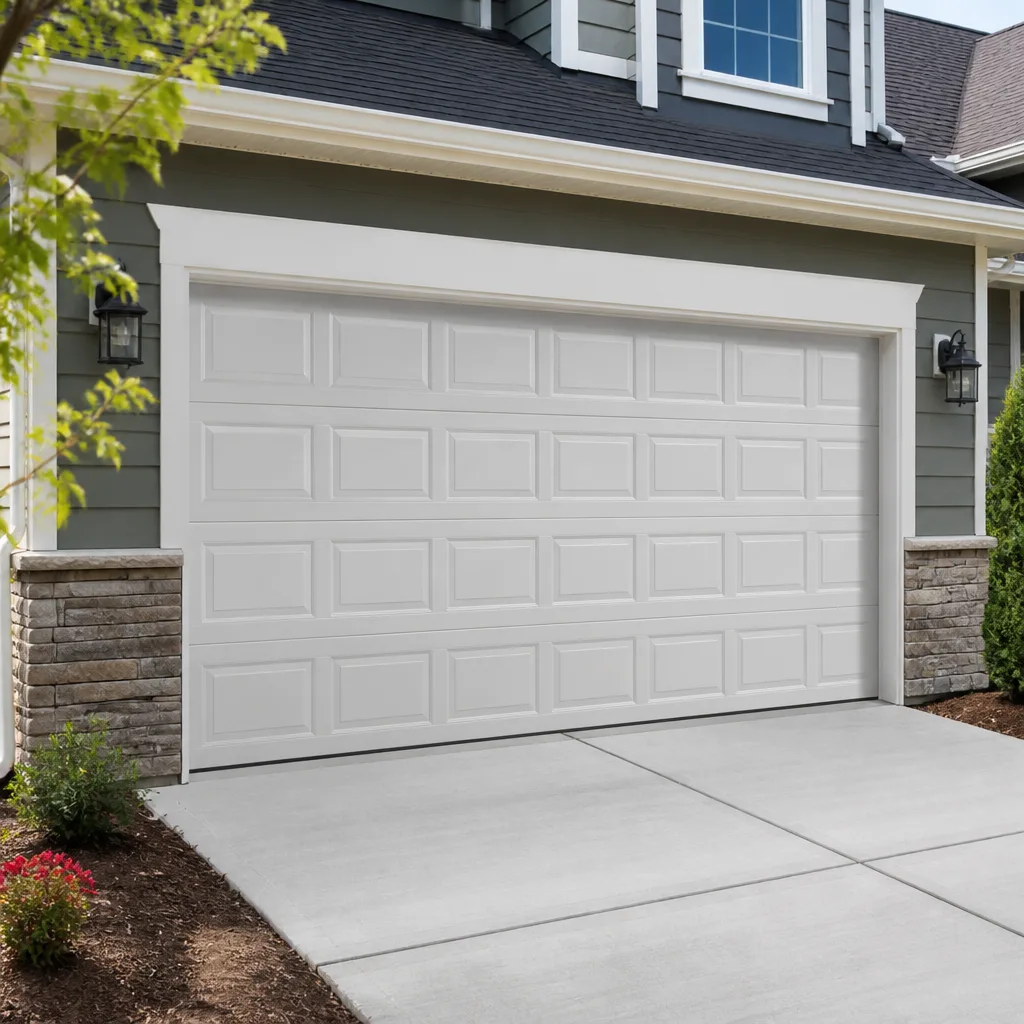 Raised-panel steel
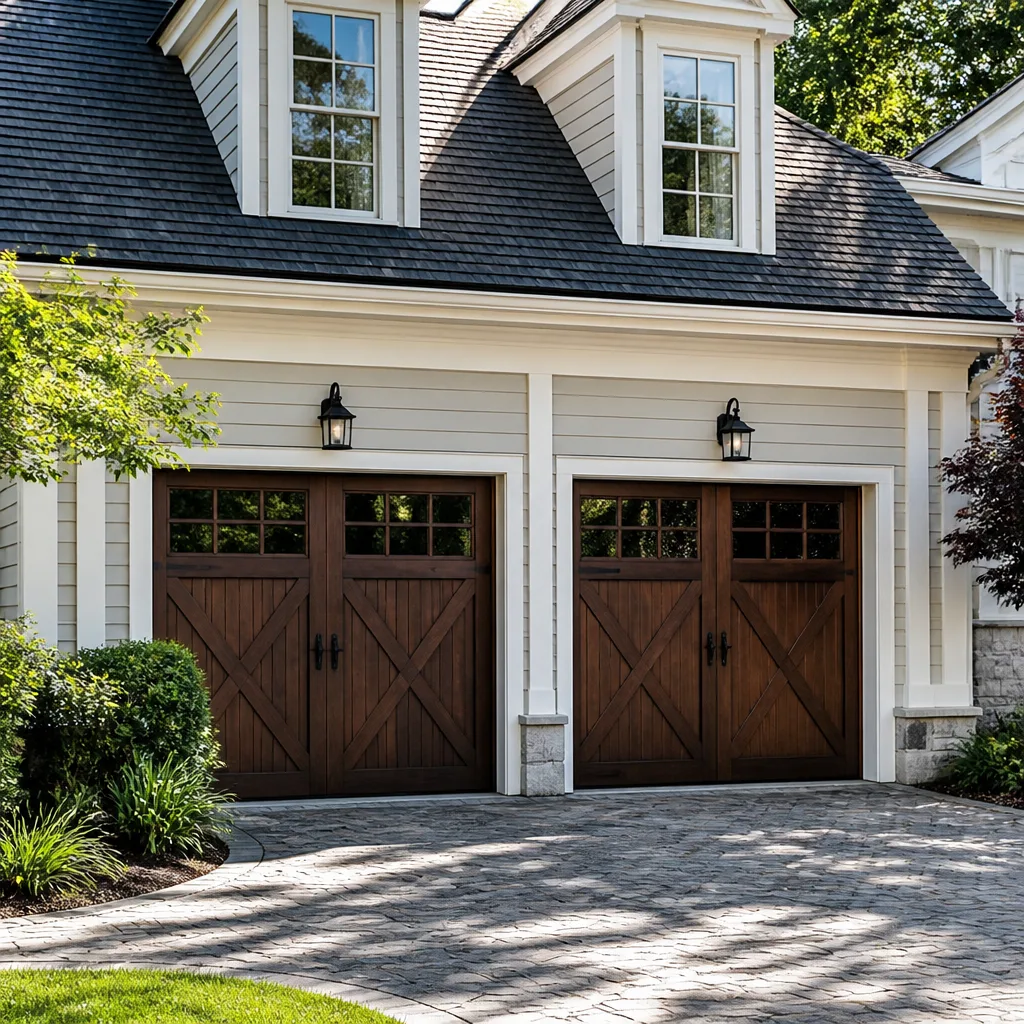 Carriage house
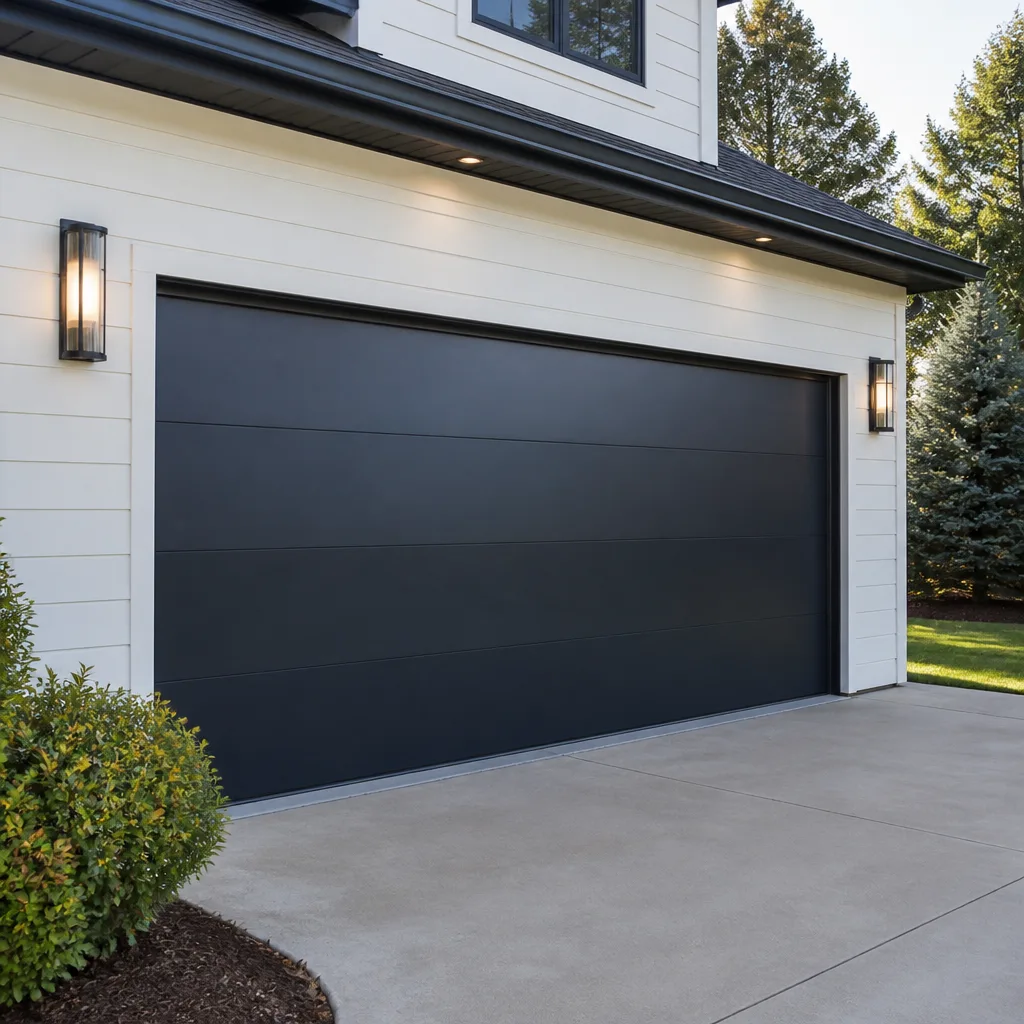 Modern flush
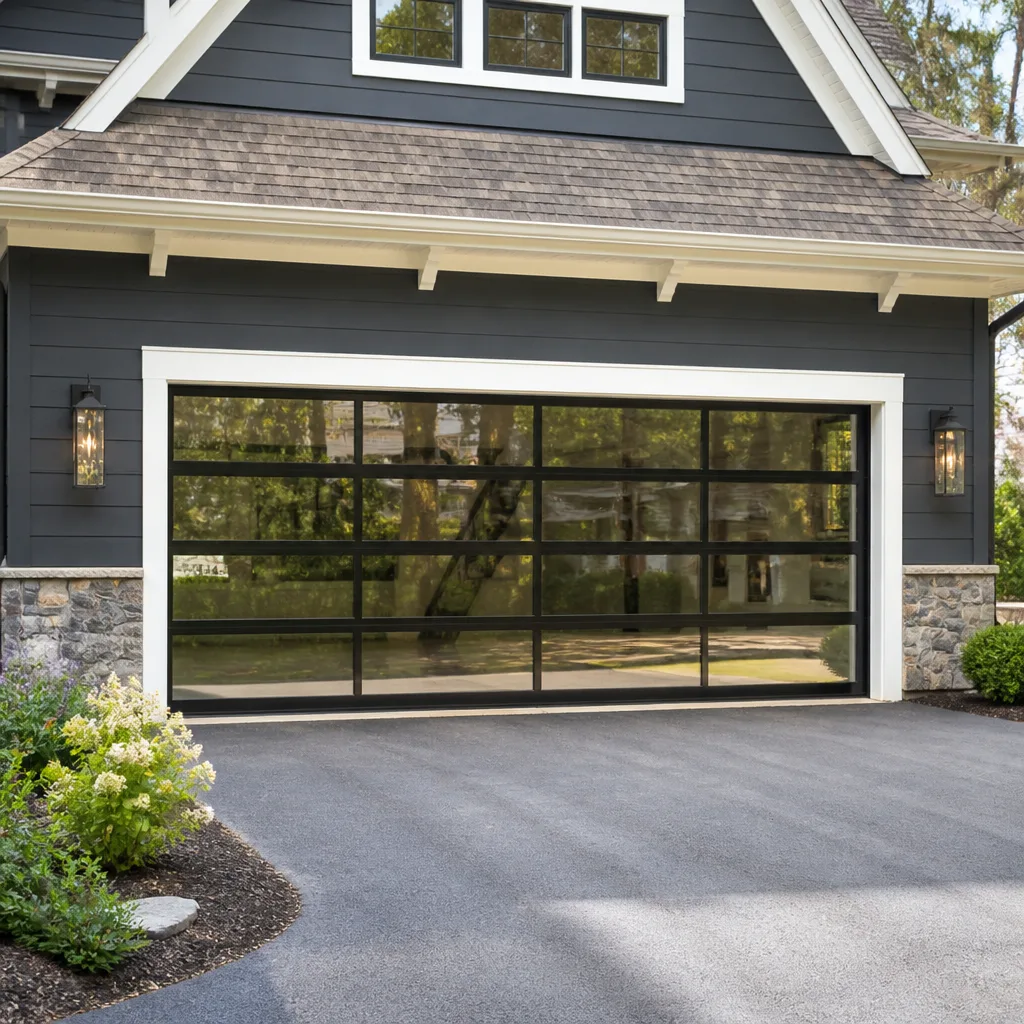 Full-view glass
 LiftMaster openers
 Chamberlain openers
Full 25-point door and opener safety check with every visit - springs, cables, rollers, tracks, and your LiftMaster or Chamberlain opener included
You get a price before we start. It does not change when the pro arrives.
Get your free estimateGarage Door Permits, Codes & Inspections in Wesley Chapel, FL: What You Need to Know
Here’s the part most Wesley Chapel homeowners don’t hear until it’s too late: replacing a garage door here usually requires a county permit, and a lot of replacements happen without one. It feels like a simple swap. A crew comes out, the old door goes, a new one goes up, and nobody mentions paperwork. But this is Pasco County, and much of Wesley Chapel sits in a wind-borne debris region where the rules are stricter than people expect. This guide walks through when a permit is required, how Florida’s wind load rules shape which door you can buy, what the inspection actually checks, how HOA approval layers on top, and what to do if a previous owner skipped the permit entirely.
Quick Answer
In Wesley Chapel and the rest of Pasco County, a full garage door replacement requires a building permit and a final inspection, while a repair or a like-for-like swap of the same door model generally does not. The door and its installation must meet Florida Building Code wind load requirements, and many Wesley Chapel HOAs require separate architectural approval before the work starts. If you’re replacing a door, plan for the permit, the inspection, and often the HOA sign-off as part of the job – not an afterthought.
Styles & brands we work with
- Raised-panel steel
- Carriage house
- Modern flush
- Full-view glass
- LiftMaster openers
- Chamberlain openers
Table of Contents
- When a permit is required and when it isn’t
- Wind load rules and how they affect door choice in Wesley Chapel
- What the inspection actually involves
- How HOA approval layers on top of the county permit
- What to do if a previous owner skipped the permit
- What permits, code compliance and installation cost
- Selling, insuring, or refinancing a home with a garage door
- Frequently asked questions
When a Permit Is Required and When It Isn’t
The threshold comes down to one question: are you changing the door, or are you keeping the same door and fixing a part of it? A full replacement, where the old door comes off and a new door goes on, is treated as a structural and wind-load change to the building envelope. That requires a building permit from Pasco County and a final inspection. Swapping in the identical model of door that was already there is a gray area that most jurisdictions treat as still requiring a permit because the wind-load rating is being re-established on the new unit.
Repairs are different. Changing a torsion spring, replacing a roller, swapping an opener, adjusting a track, or replacing hinges and cables are maintenance and repair tasks. Those typically don’t require a permit because you’re restoring the existing assembly rather than replacing the rated product. Our garage door repair work on doors across Wesley Chapel falls into this category and doesn’t trigger the permit process.
Here’s how to tell which one you’re facing:
- New door, different model or material: permit required.
- Same model door replacing an identical failed unit: treat as a replacement and expect a permit; confirm with Pasco County before skipping it.
- Spring, cable, roller, hinge, or track repair: no permit.
- Opener replacement: no permit in most cases; this is equipment, not envelope.
- Adding a garage door where none existed: permit required, often paired with a wall-opening inspection.
If you’re unsure, a two-minute phone call to the Pasco County building department settles it. Ask them directly whether your job needs a permit and what the inspection requires. We’ve found that homeowners who ask this question up front avoid the much larger headache of discovering the problem during a home sale. The rules aren’t designed to trip you up. They exist so the door’s wind resistance can be verified, which matters when a storm hits.
Wind Load Rules and How They Affect Door Choice in Wesley Chapel
Florida Building Code Section 1609 governs wind loads, and it applies to garage doors the same way it applies to windows, entry doors, and roof sheathing. In practical terms, your new garage door has to be rated to withstand the wind pressures expected at your specific location. That’s not a uniform number across Pasco County. It varies by exposure and by whether the property sits in a wind-borne debris region, which covers much of Wesley Chapel.
What this means for a homeowner is that a door you buy off the shelf at a big-box store may not be approved for your address even if it looks identical to the one across the street. The door needs a wind-load rating on its label and documentation that matches the pressures required for your property. Manufacturers like Clopay, Amarr, Wayne Dalton, and Raynor all produce Florida-approved product lines with the required labeling, but not every model in their catalog is compliant. The permit application is where the county checks this, and the inspection is where it’s confirmed on the installed door.
We work on the brand already in your garage – Raynor, LiftMaster, Chamberlain, Genie and the other major residential lines – which means when we specify a replacement, we’re matching a wind-rated door to the opener and hardware that’s already installed. That’s not a courtesy, it’s how you avoid a mismatched system where the door is rated but the opener’s travel limits or force settings aren’t set for the new weight.
When choosing a door for a Wesley Chapel home, ask three questions before the order is placed:
- What wind speed and pressure rating is required at my specific address? The county can confirm this from your property record.
- Does the door model I’m considering carry a Florida Product Approval number? Ask for it in writing.
- Will the installer provide the wind-load documentation with the permit application? This is required for the permit to be issued.
Skimp on any of those three and the permit stalls or the inspection fails. The replacement is then a second job rather than the same job done properly. Our garage door opener repair team handles the opener side of a replacement so the door and system are matched to the door’s rated weight, which is one of the small details that shows up in an inspection.
What the Inspection Actually Involves
The Pasco County inspection for a garage door replacement is a focused check, not a full-home review. The inspector arrives after the door is fully installed and confirms a short list of items. In our experience, most of the failures we hear about come down to missing documentation or a simple installation detail rather than the door itself being wrong.
Here’s how the process typically runs from start to final:
- Permit application: the installer submits the application with the door’s Florida Product Approval documentation and wind-load calculations for your address. Pasco County reviews and issues the permit.
- Installation: the door goes in. The installer follows the manufacturer’s anchor schedule and confirms the door operates smoothly through the full travel range.
- Inspection request: once installed, the installer or homeowner calls for the inspection. Pasco County typically schedules within a few business days, though timing varies by workload.
- On-site inspection: the inspector verifies the door model and labeling match the permit, checks the anchors and fasteners, confirms the wind-load rating, and observes operation.
- Final approval: if everything matches, the permit is closed. If something doesn’t, the inspector writes a correction notice and a re-inspection is scheduled.
What causes a failed inspection most often? A door label that doesn’t match the model on the permit. Incorrect or missing fasteners at the specified anchor points. A door that binds or reverses improperly on operation. Wind-load documentation missing from the permit file. Any of these can be corrected, but each one adds a return trip and delays closing the permit.
The single biggest reason permits go unclosed is that the installer finishes the job and never calls for the inspection. Homeowners don’t always know they need to make sure that step happens. We treat the inspection as part of the job, not something the customer has to chase. If you’ve already had a door installed by someone else and you’re not sure the permit was ever closed, that’s worth checking before you list the house.
How HOA Approval Layers on Top of the County Permit
In Wesley Chapel, the county permit isn’t always the only gate. Many of the larger planned communities here have HOAs with their own architectural review process for exterior changes. That review is separate from the permit and runs on a different timeline. The county cares about wind safety and code compliance. The HOA cares about how the door looks from the street.
A county permit does not satisfy an HOA requirement, and an HOA approval does not satisfy the county. You need both, and they can be requested in parallel to save time. In practice, the HOA approval often takes longer because the architectural committee meets on its own schedule and may ask for a sample, a photo, a color swatch, or manufacturer documentation before signing off.
What the HOA process usually wants to see:
- The specific door model and color, with a photo or sample
- Manufacturer documentation showing the door style and finish
- Window insert style and color, if the door has them
- Confirmation that the door doesn’t face the street in a way the community’s design guidelines restrict
- A signed application from the homeowner, often with a fee
The mistake we see most often is a homeowner ordering a door they like, scheduling installation, and only then submitting to the HOA. If the committee asks for a different color or style, the door has to be reordered or refused, and that costs both time and money. The clean sequence is: check HOA guidelines first, submit the application, then submit the county permit application, then order the door once both are moving. Our Wesley Chapel Garage Door Repair Pros team can supply the manufacturer documentation the HOA usually asks for, which shortens the review.
What to Do if a Previous Owner Skipped the Permit
This is more common than people realize. A door gets replaced, the previous owner didn’t get a permit, and the paperwork never surfaces until a sale, a refinance, or an insurance claim forces it into view. The good news is that unpermitted work can almost always be addressed retroactively. It just takes a specific sequence of steps, and it’s far easier to do before a sale than after an offer is on the table.
The general path forward is:
- Verify the history. Pull the permit records from Pasco County for your address to confirm whether a permit was ever pulled for the door. The building department can tell you.
- Inspect the existing installation. A technician evaluates the door’s wind-load labeling, anchor schedule, and operation to see whether it would pass an inspection as installed.
- Apply for a retroactive or after-the-fact permit. Pasco County handles unpermitted work through a specific process that often includes an inspection of the existing installation. Ask the building department what they need for your case.
- Correct whatever fails. If the door isn’t wind-rated for the address or the anchors aren’t correct, those items get brought into compliance before the inspection.
- Close the permit. Once the inspection passes, the permit is finalized and the door is legal for purposes of a sale, refinance, or insurance review.
The worst outcome is discovering the problem mid-transaction. A buyer’s inspector or a title search will often find the discrepancy, and the seller is then negotiating from a weaker position. If you’re planning to sell a Wesley Chapel home with a garage door replacement in its recent past, checking the permit status now is worth the effort. It’s a smaller conversation on your own timeline than one forced by a closing deadline.
While you’re confirming the permit history, it’s worth having the door inspected for mechanical condition at the same time. An old installation with a spring that’s near the end of its life isn’t going to pass a wind-load inspection any better than a newer one that was installed wrong. Our garage door spring repair team can assess the spring package while the door is being evaluated for code compliance, so you handle both items in one visit.
What Permits, Code Compliance and Installation Cost
Pricing for garage door work in the Wesley Chapel area breaks into three parts: the door itself, the installation labor, and the permit and inspection fees. The permit fee is set by Pasco County based on the valuation of the work, so it varies by job. We don’t quote county fees since they’re set by the county, but we list them out clearly on the estimate so you know what’s going to the county versus what’s going to the installation.
A realistic budget for typical residential work in this market looks like this:
| Item | Typical Estimated Range |
|---|---|
| Single-car garage door replacement (door only) | $550 – $1,200 |
| Double-car garage door replacement (door only) | $1,100 – $2,400 |
| Installation labor, single door | $350 – $650 |
| Installation labor, double door | $500 – $900 |
| Opener replacement, installed | $300 – $650 |
| Torsion spring replacement (one spring) | $180 – $340 |
| Torsion springs, matched pair | $360 – $680 |
| Pasco County permit fee | Set by the county based on job valuation |
| HOA application fee (where applicable) | Varies by community |
These are typical estimated ranges, not final prices. The written estimate sets the final price, and it’s quoted and agreed before any work starts. A permit fee, HOA application fee, and any measured adjustments are called out separately so nothing appears on the invoice that wasn’t on the estimate. If you’re weighing a repair against a full replacement, the permit requirement is one factor that tips the math toward repair when the door itself is still rated and only a component has failed.
When you’re ready for an exact quote, call (877) 657-1302. The estimate is free, we answer 24/7, and we’ll walk through whether your job needs a permit before anything is ordered. Fast dispatch from 7am to 7pm, Sunday through Friday.
Selling, Insuring, or Refinancing a Home with a Garage Door
A garage door replacement that was done without a permit can create problems in three specific situations. Knowing how each one plays out helps you decide when to act rather than when to react.
During a sale: a buyer’s home inspector is likely to note the door’s age and any visible installation issues, and the title search often surfaces open or missing permits. If the door needs a permit but doesn’t have one, the transaction gets complicated fast. Some buyers walk. Others renegotiate. Some lenders won’t close until the permit is closed. The good news is that this can all be resolved ahead of time with a retroactive permit.
During an insurance claim: if a storm damages the door, the insurer will look at the door’s wind-load rating and permit history. A door that doesn’t meet the code for your address at the time of installation can become a coverage dispute. The specifics of any policy vary, so read yours and ask your agent about wind-damage claims on garage doors. We’ve found that a compliant door with a closed permit removes this uncertainty.
During a refinance: appraisers and lenders sometimes flag unfinished permits on a property. An open permit on the title search will stall or scuttle a refinance until it’s closed. Closing it before you apply for the refinance is far easier than closing it during the appraisal process.
If you’re in any of these three situations and aren’t sure of your door’s permit status, pull the county records for your address before anything else. Then have the installation evaluated so you know whether the door would pass or needs correction. That two-step sequence puts you in a position of control. Permits aren’t a technicality in a wind-borne debris region. They’re the documentation that says the door protecting your home meets the code the insurer and the buyer are relying on.
See the difference
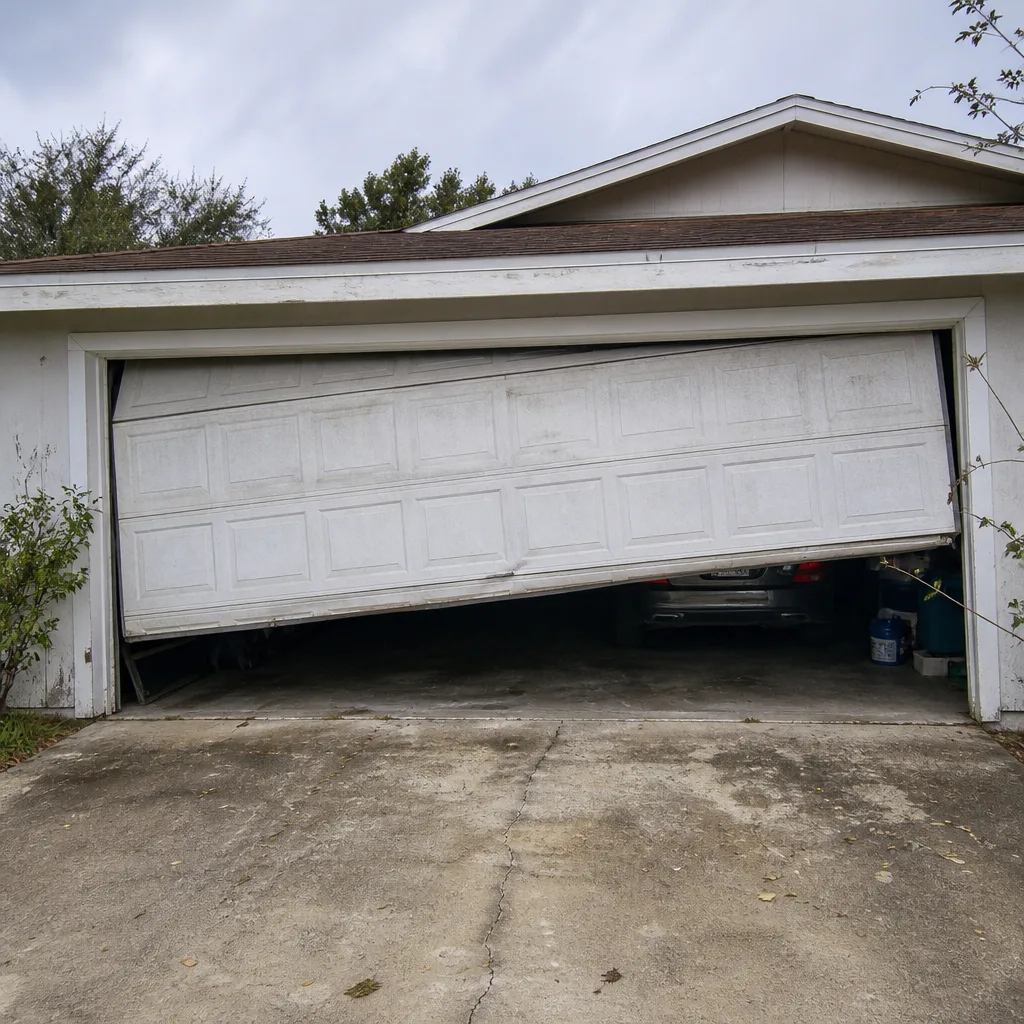 Before
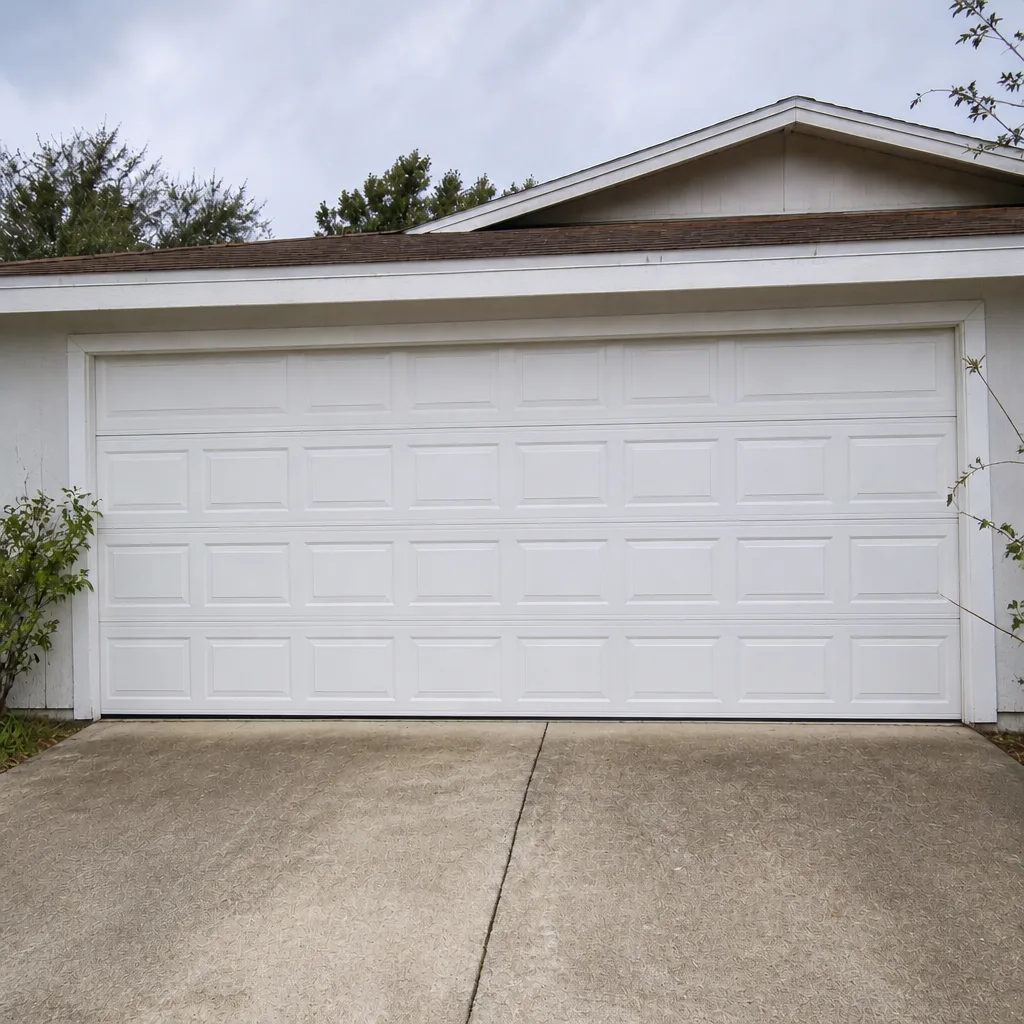 After
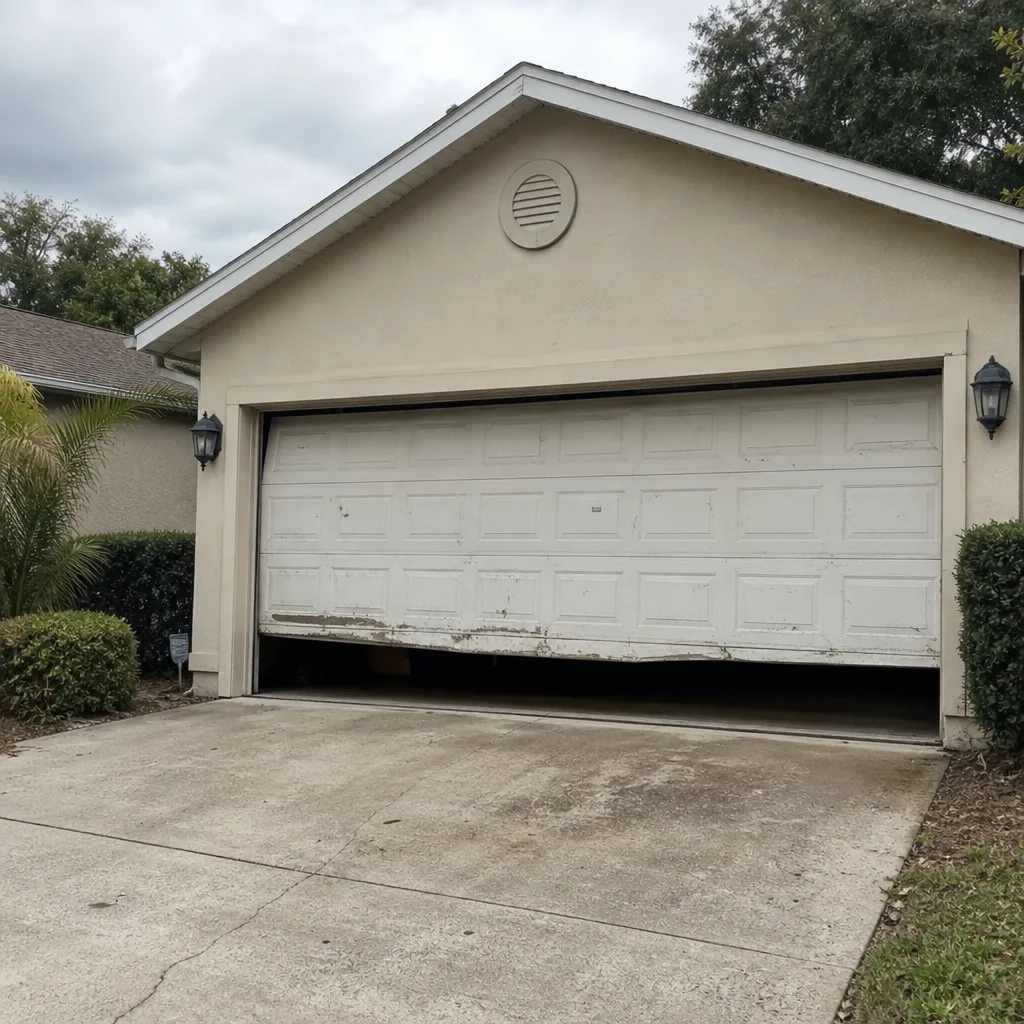 Before
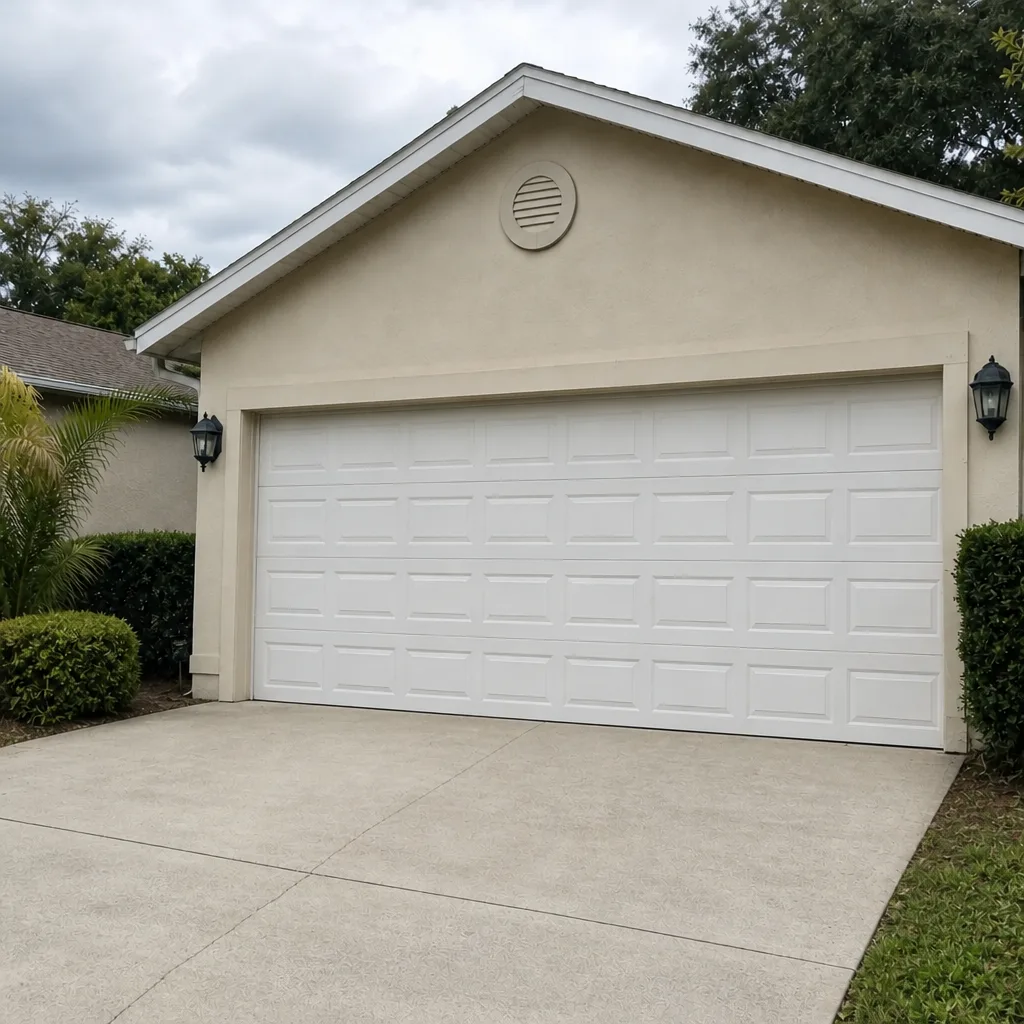 After
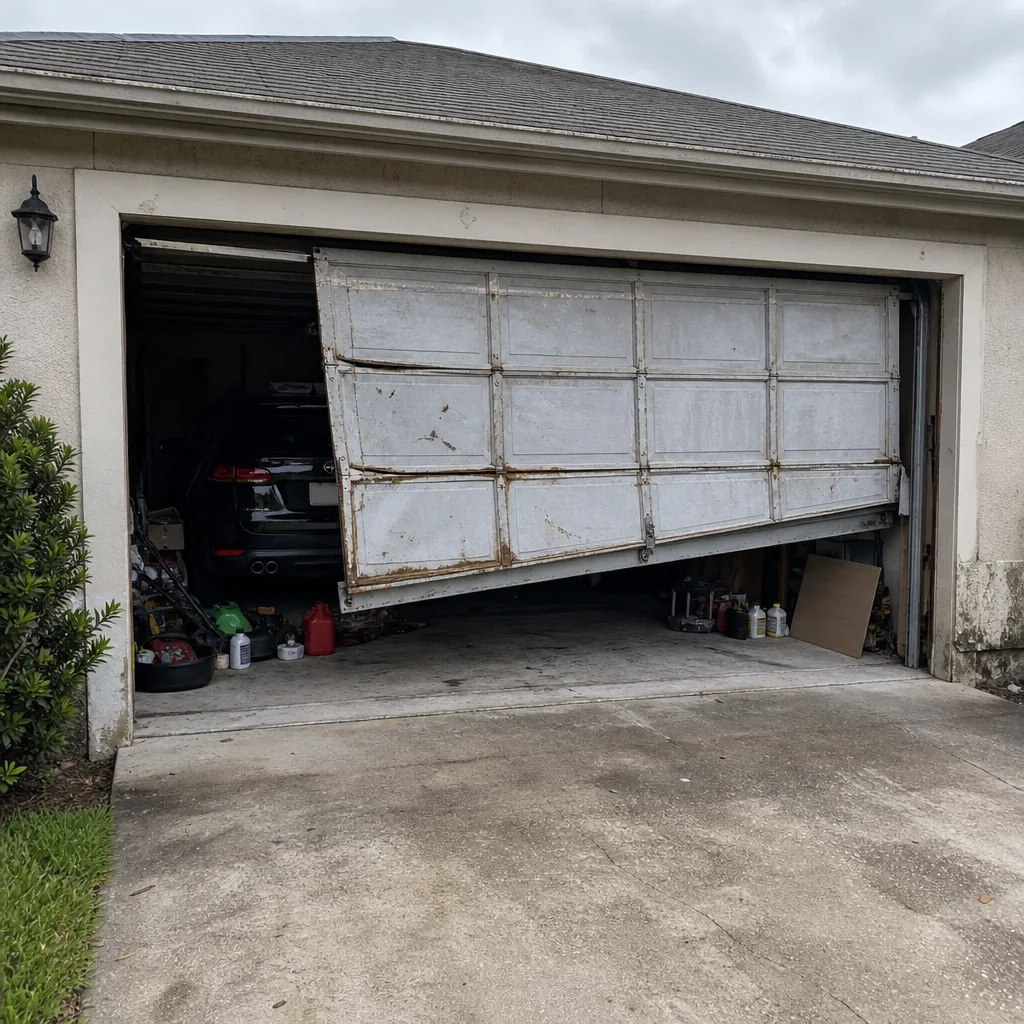 Before
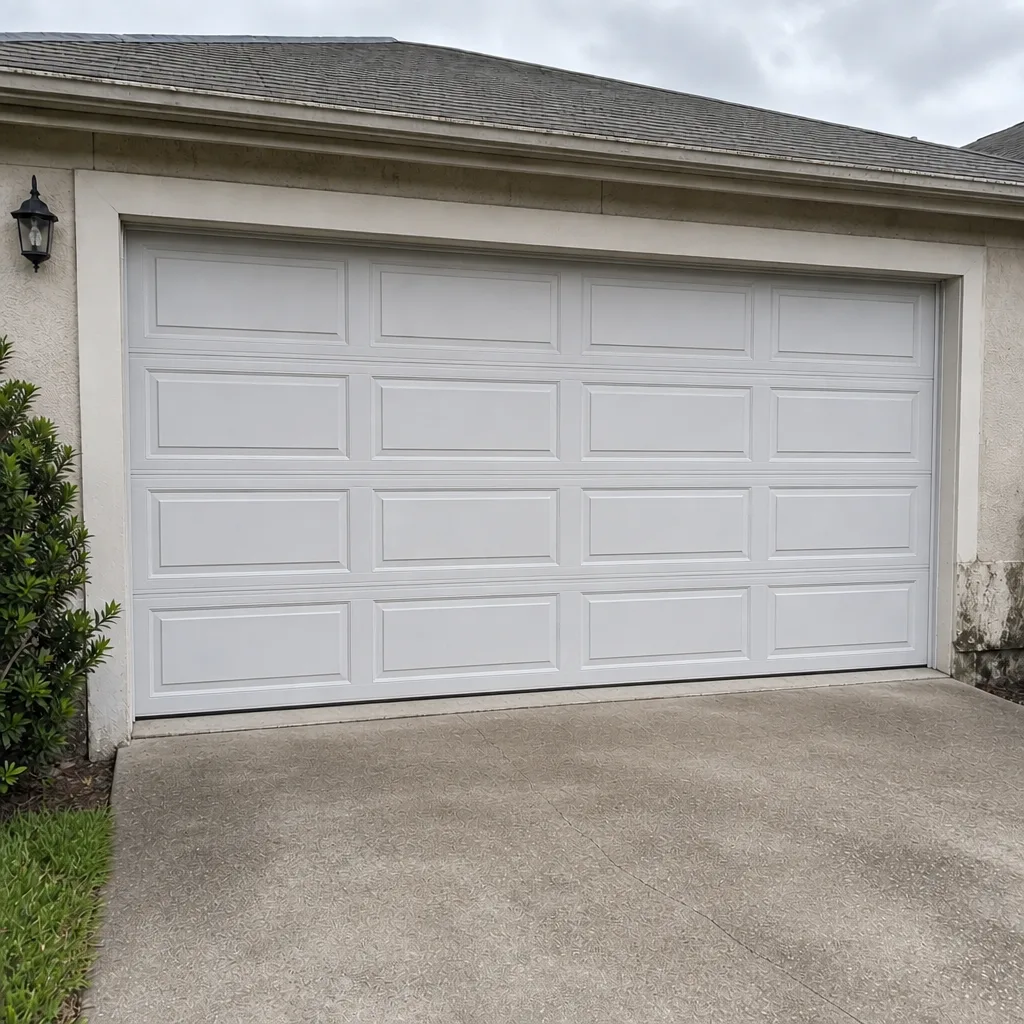 After
Common Mistakes to Avoid
- Replacing the door without pulling a permit. In Pasco County, a full replacement is a permitted job. Skipping the permit doesn’t save time; it just moves the problem to a future sale or claim, and correcting it later costs more than doing it right.
- Ordering the door before HOA approval. Many Wesley Chapel communities review exterior changes separately from the county. A door ordered before the HOA signs off risks a reorder if the design isn’t approved.
- Buying a door that isn’t wind-rated for your address. A door that’s compliant two streets over might not be compliant at your property. The wind-load rating has to match the pressures required for your specific location.
- Skipping the final inspection. The permit doesn’t close itself. If nobody calls for the inspection, the permit stays open indefinitely and shows up later as a title or refinance problem.
- Letting the labels come off. The door’s wind-load label is what the inspector verifies. Once it’s removed or painted over, the installation is much harder to document as compliant.
- Assuming an opener replacement needs a permit. Openers are equipment, not envelope, and generally don’t require a permit. Spending money on a permit application you don’t need is a waste of both fee and time.
- Waiting until a sale to check the permit history. Pulling the county records now, before a transaction pressure-cooks the timeline, gives you room to correct issues on your own schedule.
When to Call a Professional
Call a professional when the door itself is being replaced, when a spring or cable has failed, when the door binds or reverses on operation, or when you’re not sure of the permit history on a recent replacement. Springs and cables are the genuinely hazardous parts of a garage door system – they’re under high tension and can cause serious injury if handled by an untrained person, which is why we treat spring repair as a specialist job rather than a DIY project. If your door is stuck open, stuck closed, or not secured and you need to get it back to safe operation, that’s the kind of situation that shouldn’t wait. Wesley Chapel Garage Door Repair Pros offers free estimates in Wesley Chapel – call (877) 657-1302. We answer 24/7. Fast dispatch from 7am to 7pm, Sunday through Friday. Our technicians have up to 12 years of experience across LiftMaster, Chamberlain, Genie, Clopay, Amarr, Wayne Dalton, Craftsman, and Raynor systems.
Frequently Asked Questions
Yes – in Wesley Chapel and Pasco County, a full garage door replacement typically requires a building permit and a final inspection because the wind-load rating is being re-established on the new door. A repair to the existing door, such as a spring swap or roller change, generally does not require a permit. Call the Pasco County building department to confirm your specific job, and call (877) 657-1302 for a free estimate on the work – we’ll walk you through the permit sequence before anything is ordered.
A repair restores a component of the existing door and typically needs no permit; a replacement installs a new door product and generally does. If the door itself stays on the house and only springs, cables, rollers, hinges, or the opener changes, you’re in repair territory. If the door comes off and a new one goes on, even as the identical model, expect a permit. Call (877) 657-1302 for a free estimate and a clear answer on which category your job falls into.
Once the door is installed and an inspection is requested, Pasco County typically schedules within a few business days, though timing varies with the county’s workload. The inspection itself is usually short; the inspector checks labeling, anchors, operation, and the wind-load documentation against the permit. If everything matches, the permit closes and the job is done. Call (877) 657-1302 to book a free estimate – estimates are free and we answer 24/7.
A failed inspection results in a correction notice listing what needs to change, and a re-inspection is scheduled after the fix. The most common causes are a mismatched model or missing label, incorrect anchors, or operation issues. All are correctable. Prevent the failure up front by choosing an installer who submits the permit correctly and provides the wind-load documentation. Call (877) 657-1302 for a free estimate on a compliant replacement.
In many Wesley Chapel communities, yes – HOA architectural review is separate from the county permit and typically requires a specific application with door model, color, and manufacturer documentation. HOA approval does not replace the county permit and vice versa; you need both. Apply early to avoid a reorder. Call (877) 657-1302 to get a free estimate and the manufacturer documentation your HOA will want to see.
Unpermitted work can usually be addressed retroactively – pull the county records, have the installation evaluated, apply for an after-the-fact permit, correct anything that fails, and close it out. Doing this before a sale, refinance, or claim is far easier than dealing with it under a deadline. Call (877) 657-1302 for a free estimate – estimates are free and we’ll help you map out the retroactive sequence.
The Bottom Line
Garage door replacements in Wesley Chapel and Pasco County are permitted work with a real inspection behind them, and the wind-load rules in Florida Building Code Section 1609 apply to the door you choose. Most Wesley Chapel HOAs add another layer of approval on top. The sequence that works is: check HOA guidelines, submit both applications, order the door once both are moving, install, and close the permit with the inspection. The cost of doing it right is the permit fee. The cost of skipping it is discovering the problem during a sale, refinance, or insurance claim. If your door’s history is unclear or you’re ready to replace, call us.
Call (877) 657-1302 for a free estimate. We answer 24/7. Fast dispatch from 7am to 7pm, Sunday through Friday. Estimates are free, pricing is set per job by the written estimate, and the price is quoted and agreed before any work starts. Our technicians have up to 12 years of experience and work on the brand already in your garage.
Written by the team at Wesley Chapel Garage Door Repair Pros.